
Water Leaking From Window Frame: Causes, Fixes & Who to Call
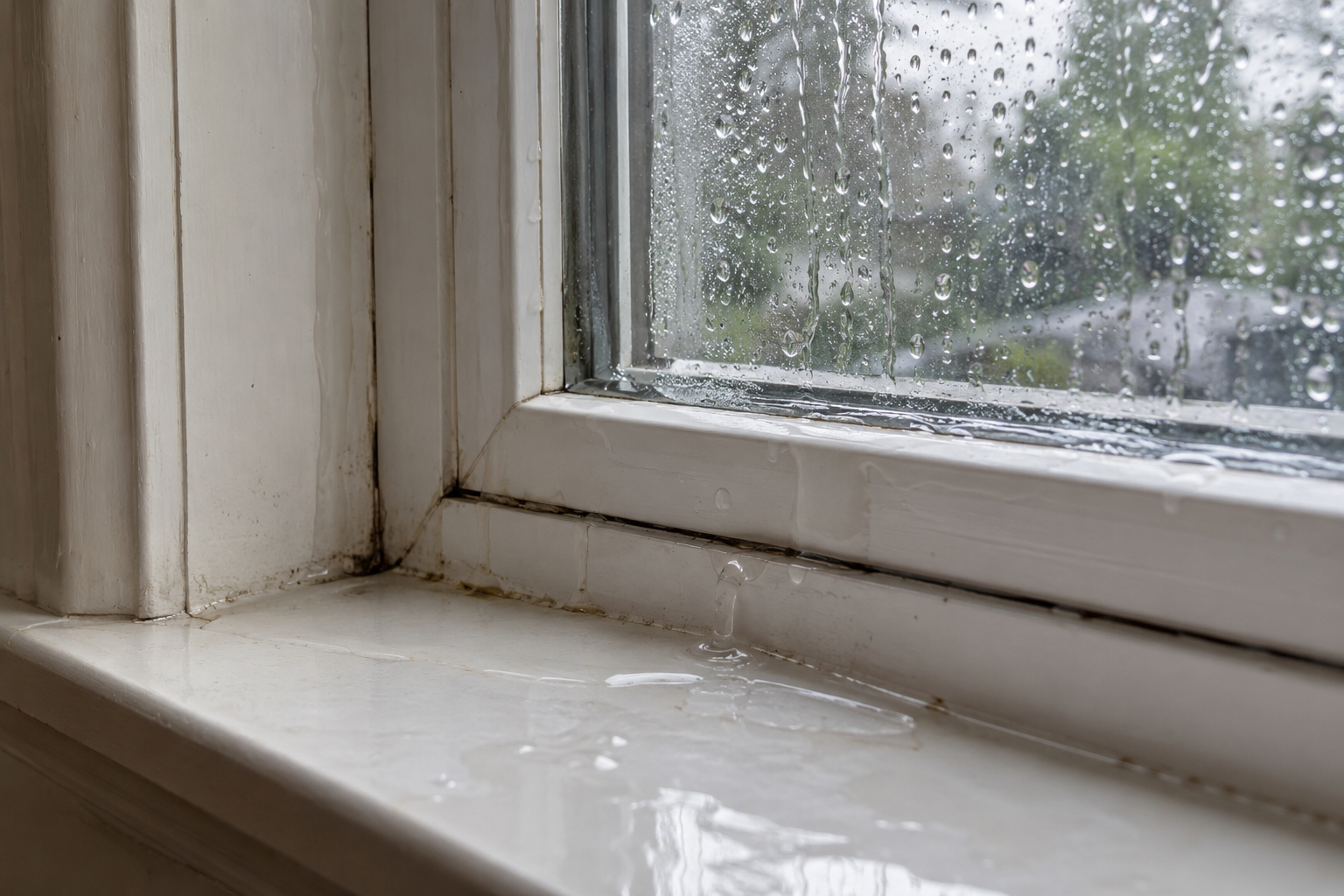
Water showing up along a windowsill or dripping from the frame during a heavy downpour doesn't necessarily mean the window itself is damaged. Sometimes, deteriorated caulking is to blame. In other cases, water may be entering through gaps around the installation or finding its way into the surrounding wall.
The tricky part is figuring out where the water actually entered. For example, a leak visible at the bottom of a window may have started somewhere above it.
Here, we explain the likely causes of water leaking from a window frame and how to fix these problems. We’ll also talk about when professional handyman repairs or window replacement may make more sense.
Can Water Leak Through a Window Frame?
Yes. Water can leak through a window frame when its joints, seals, or drainage system fail to keep water out or direct it away properly. Rain can also enter through gaps around the window or improperly installed flashing, which is the material used to channel water away from vulnerable openings.
However, water appearing around a window doesn't always mean the frame itself is defective. The source could be the surrounding siding, exterior trim, or another part of the wall above the opening. The entry point must first be identified before deciding what needs to be repaired.
How Can You Tell Where the Window Leak Is Coming From?
The location and timing of the water can help narrow down the cause, although they won't always reveal the exact entry point. Pay attention to what happens during rain and where the moisture first appears.
Here are some clues worth checking:
Water appears only when it rains: Rainwater may be entering through the window, its flashing, or the surrounding exterior wall. Leaks that occur mainly during wind-driven rain can also point toward gaps around the sash.
Water collects at the bottom of the window: Check the sill, weatherstripping, and drainage channels. Water collecting here doesn't necessarily mean the leak started at the bottom.
Stains appear above or beside the window: Water may be entering through flashing or another part of the wall and traveling toward the window opening.
Moisture forms on the interior glass during cold weather: This may be condensation caused by humid indoor air contacting a cold surface. Don’t mistake it for an exterior leak.
Paint bubbles or drywall deteriorates around the frame: Water may have reached materials behind the interior finishes, especially if the damage keeps returning.
If you cannot identify the source, take photographs of the problem area and record when the moisture appears. Avoid directing a high-pressure hose at the window to reproduce the leak; doing so can force additional water into vulnerable areas.
How to Fix Water Leaking From Window Frames
The right fix depends on where water is getting in. Some problems, such as damaged weatherstripping or debris in accessible drainage openings, may be relatively straightforward. If the leak involves components hidden behind the siding or window trim, however, it makes perfect sense to call a professional for inspection and repair services.
Here are the main areas to inspect and the repairs that may be appropriate.
Check the window seals and caulking
Exterior caulking helps seal certain joints around a window and prevents rainwater from entering through gaps. Over time it can crack, shrink, or pull away from the surfaces it was meant to protect.
Check accessible joints for visible deterioration. Where caulking is intended to provide a seal, damaged material can be removed and replaced with a compatible exterior-grade sealant following the manufacturer's instructions.
However, avoid applying caulk across every visible gap. Some openings are intentionally left unsealed to allow water to drain. Caulking over them can trap moisture inside the window or wall assembly. It also won't correct missing or poorly installed flashing.
Clear blocked window drainage holes
Many modern windows have small drainage openings called weep holes. These allow water that enters designated parts of the frame to drain back outside. If debris blocks these openings, water may collect inside the window's drainage channels and, in some cases, overflow toward the interior.
Inspect accessible drainage openings and gently remove visible dirt or debris according to the window manufacturer's instructions. Avoid forcing sharp objects into the openings or damaging internal components.
Not every window has visible weep holes. Their locations also differ by design. Never drill additional holes into a window frame unless the manufacturer specifically instructs you to do so.
Inspect the weatherstripping and operable window seals
Weatherstripping helps seal the gaps between the movable window sash and the frame when the window is closed. When it becomes brittle, compressed, torn, or displaced, wind-driven rain may find its way through those gaps. Inspect the weatherstripping for damage and check whether the sash closes properly.
Replacing worn weatherstripping with a compatible product may resolve this type of leak. However, if water is entering behind the frame or through the surrounding wall, replacing the weatherstripping won't address the source.
Check for problems with window flashing and installation
Flashing is one of the most important defenses against water entering around a window. It works with the wall's water-resistive barrier to direct rainwater away from the opening.
Missing, damaged, or faulty flashing installation can allow water to travel behind the window frame or exterior siding. In some cases, the leak may not become visible until moisture reaches the interior trim or drywall.
If the leak appears to originate behind the frame, exterior trim, or siding, have the installation inspected. Correcting concealed flashing problems may require removing exterior materials to access the affected area.
Repair damaged frames or surrounding materials
Once the source of the leak has been corrected, inspect the materials that were exposed to water.
Minor deterioration in nonstructural wood trim may be repairable. More extensive damage, particularly softened or decayed wood in the window frame, sheathing, or wall framing, may necessitate removing and replacing affected components.
Materials should also be properly dried before the wall is closed again. Covering wet or deteriorated materials with new trim or drywall can leave an unresolved moisture problem hidden inside the wall.
If the window frame is severely damaged or no longer functions properly, replacing the window may be more practical than attempting extensive repairs (which brings us to the question of whether to repair or replace your window, as we'll discuss below).
When Does a Leaking Window Need Professional Repair or Replacement?
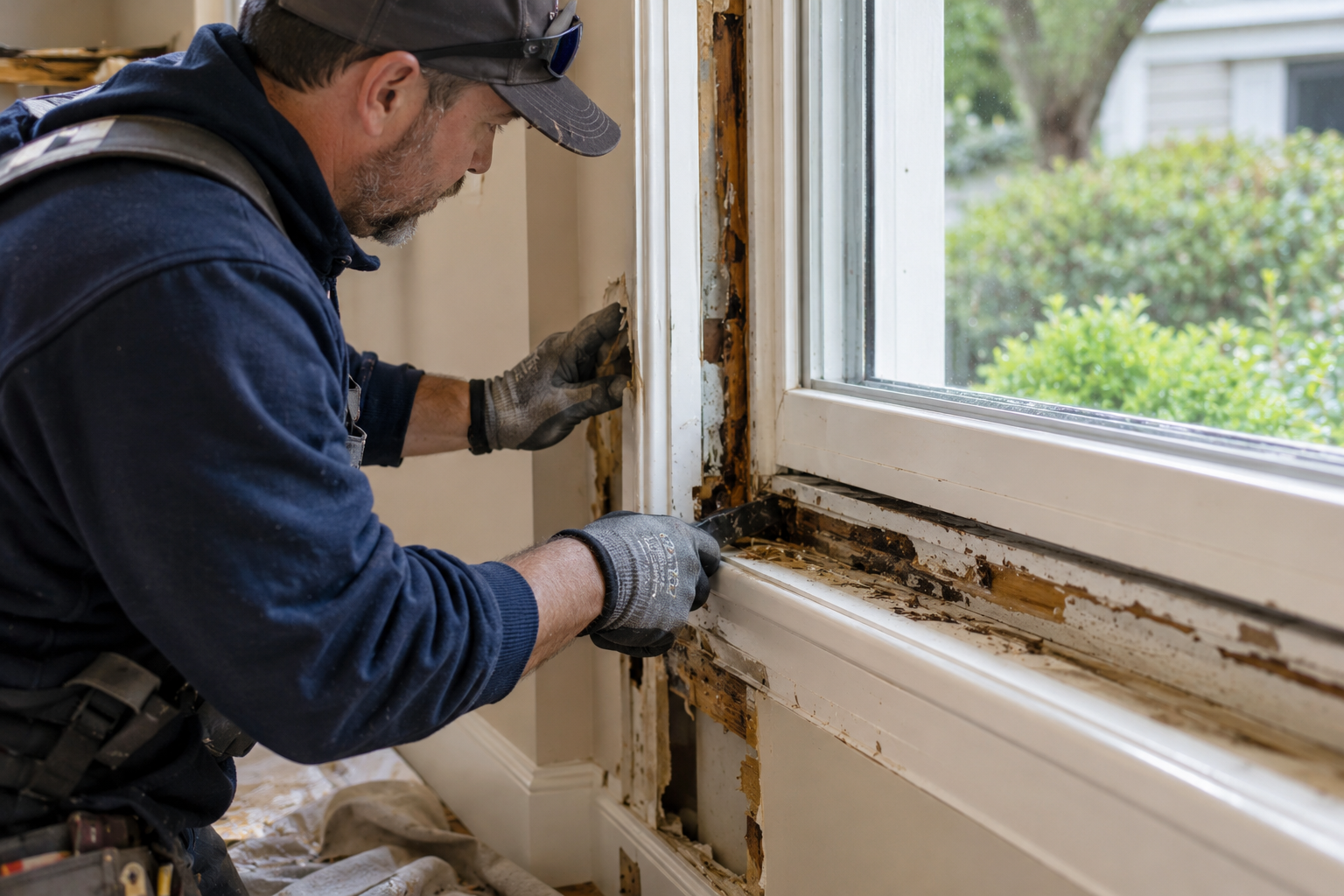
As mentioned, a leaking window doesn't automatically need to be replaced. The appropriate solution is contingent on the condition of the window, the leak source, whether water has damaged the surrounding materials, etc.
When a window can be repaired
Localized problems, such as deteriorated sealant or blocked drainage openings, may be repairable without replacing the window. The window should still close properly and be capable of draining water as designed. If the leak continues after an appropriate repair, you need to investigate further.
When the surrounding wall needs repairs
Persistent leaks can damage exterior trim, wall sheathing, framing, insulation, and interior finishes. Soft wood, recurring stains, or deteriorating drywall may indicate that moisture has reached beyond the visible window frame.
A contractor may need to remove portions of the trim or interior finishes to inspect the area. Damaged materials should be repaired or replaced as appropriate and the source of water intrusion corrected before the wall is closed.
The Environmental Protection Agency also emphasizes moisture control as the key to preventing mold problems, which includes repairing leaks and drying affected materials promptly.
When window replacement may be necessary
Replacing your window becomes worth considering when the frame or sash is severely deteriorated and the assembly can no longer function properly. Or - the damage is simply too extensive for a practical repair.
IMPORTANT: Replacing the window alone may not resolve the problem if water is entering through faulty flashing or the surrounding wall. Those conditions need to be addressed as part of the project. First identify existing water-infiltration problems and damaged materials before undertaking replacement work.
Who to Call for Water Leaking From Inside a Window Frame?
If water is leaking from inside your window frame, call a window repair specialist or a qualified exterior remodeling contractor. The right professional depends on where the water is entering and what needs to be repaired.
A window repair specialist can address problems with the frame, sash, seals, or drainage system. If the leak involves damaged flashing, siding, or surrounding walls, an exterior remodeling contractor may be better equipped to investigate and repair those areas.
If you're unsure where the water is coming from, don’t assume the window itself needs replacing. Get expert help from a contractor experienced in diagnosing water intrusion.
Need Window Water Damage Repairs in Portland?
Water leaking around a window can leave you with damaged trim, deteriorated wood, or drywall that needs replacing. Even after the leak has been corrected, those affected areas may still need professional attention.
Revive Works Remodeling provides home repair services in Portland, including repairs to water-damaged areas around windows and the surrounding walls.
If you've discovered water damage around a window, contact Revive Works to discuss what needs repairing and how to restore the affected area.