
Can Roofing Leaks Damage Siding?
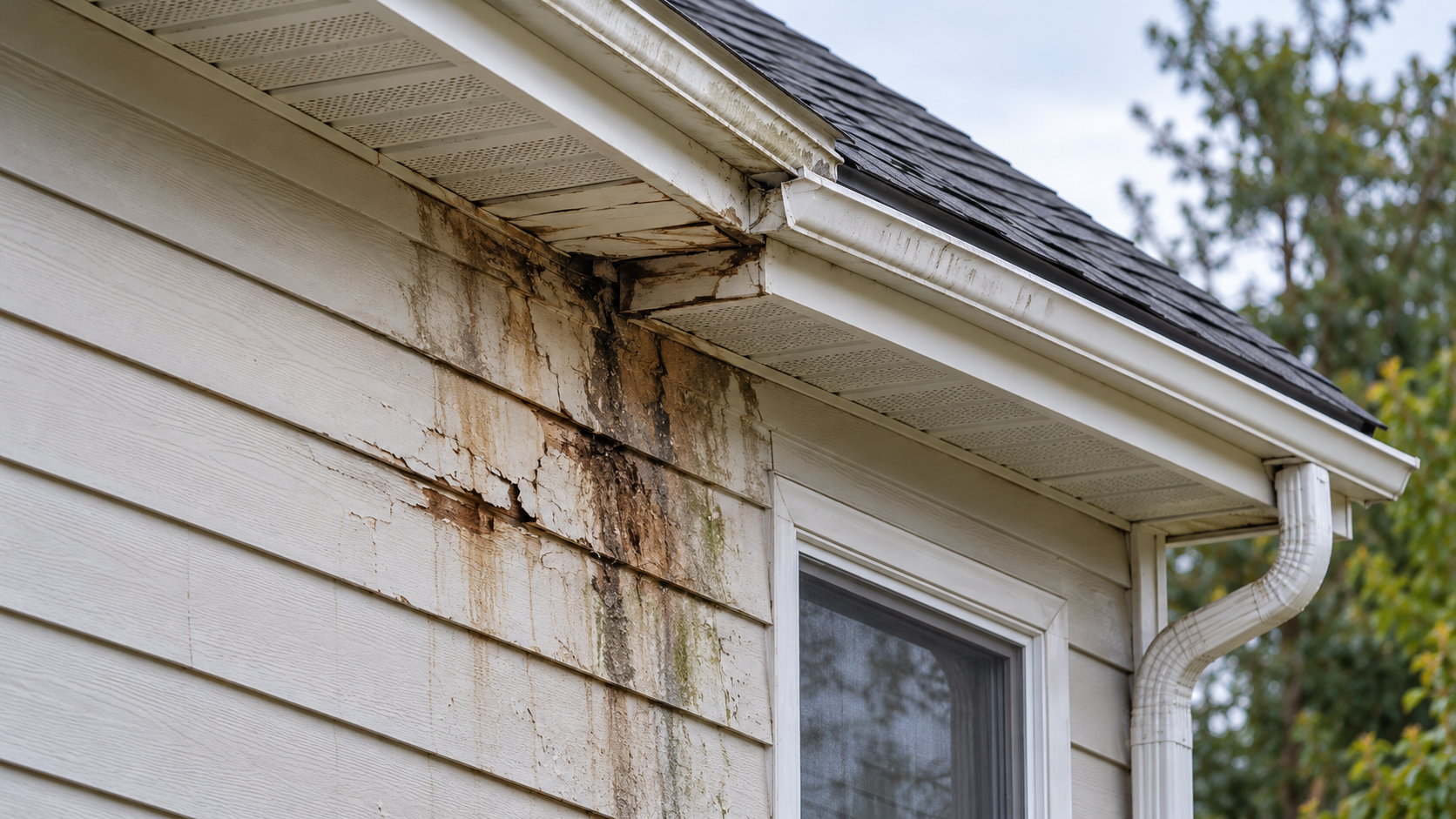
A roof leak can cause problems well beyond the shingles. Depending on where water gets in, it can reach the edge of the roof, exterior walls and materials hidden behind your siding.
The damage is not always obvious right away either. Water can travel through parts of the roof and wall assembly before showing up somewhere else.
This guide answers whether roofing leaks can damage siding, how the damage happens, signs to look for and what may need to be repaired.
Can Roofing Leaks Damage Siding?
Yes. Roofing leaks can damage siding when water reaches an exterior wall or repeatedly runs behind/over the siding. The damage can remain at the surface, but prolonged moisture can also affect the materials underneath.
How serious it becomes is contingent on where the water is entering and how long the area stays wet, as well as which parts of the wall are exposed.
How roof leaks can reach the siding
For starters, water does not necessarily drip straight down from the point where it enters a roof. It can follow roof decking, framing or other surfaces before reaching an exterior wall.
This is why siding damage may appear some distance from the original roofing problem. The stain or damp area you notice may be where the water ended up rather than where it first entered.
Roof-to-wall flashing problems
Areas where a sloped roof meets a vertical wall are particularly important. These intersections use flashing to direct water down the roof and away from the wall.
If the flashing is missing or improperly installed, water can get into the wall instead. Kick-out flashing at the bottom of a roof-to-wall intersection also helps direct concentrated roof runoff into the gutter instead of down the side of the house.
Gutter and roof-edge problems
Not every case of water-damaged siding starts with a hole in the roof. Clogged or overflowing gutters, damaged roof-edge components and drainage problems can send large amounts of water across areas that were not designed for constant exposure.
Over time, that repeated wetting can damage wood siding and trim and expose weaknesses in the wall assembly.
What happens when water gets behind siding
Siding is the outer covering of a larger wall system. Behind it are other components that may include a water-resistive barrier, sheathing, insulation and wall framing.
Once water gets behind the siding, the condition of those hidden materials matters just as much as the siding itself. A wall can therefore have more extensive moisture damage than its exterior initially suggests.
READ NEXT: Water-Damaged Subfloor: Signs, Repair & Replacement
What Does Siding Damage From a Roof Leak Look Like?
Roof-related siding damage can look different depending on the siding material and how long the moisture problem has existed. Some of the more common warning signs include:
Staining or discoloration below the roofline: Water running down the wall may leave visible streaks or areas that remain darker than the surrounding siding.
Warped, swollen, buckled or loose siding: Moisture can change the shape or condition of some siding materials, e.g., wood-based products.
Peeling or blistering paint: Paint failure can be a clue that moisture is repeatedly reaching a painted surface.
Soft or deteriorated wood: Wood siding, trim or sheathing that remains wet can eventually decay.
Mold, mildew or persistent dampness: Ongoing moisture creates conditions that can support mold growth.
Interior water stains near the same wall: Stains, damaged drywall or peeling paint indoors may indicate that water has traveled farther into the wall assembly.
These signs can tell you that there is a moisture problem, but they do not necessarily reveal where the water entered. Finding the source is an essential part of determining the right repair.
What Should You Repair First: The Roof Leak or the Siding?
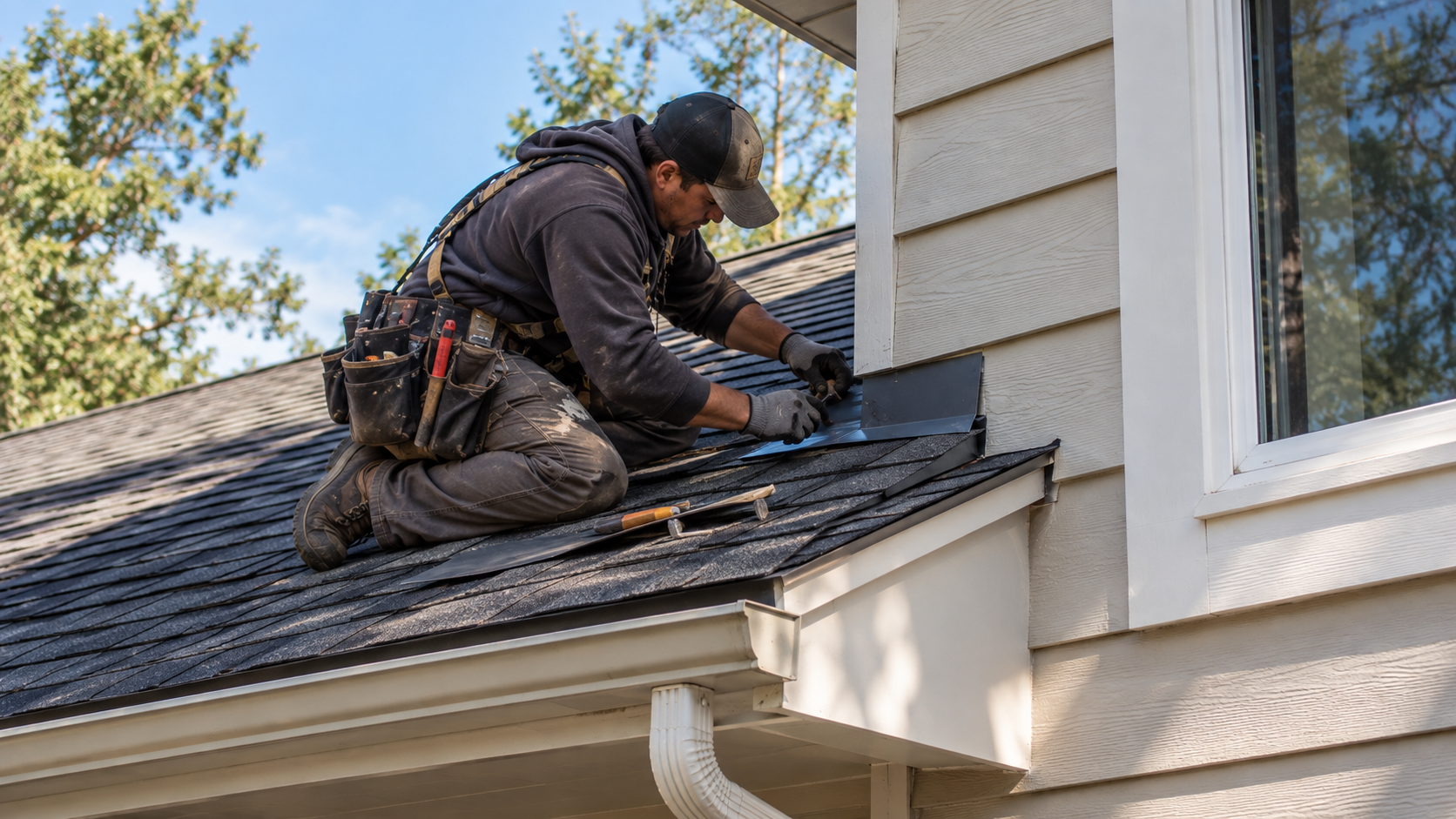
Start with the source of the water.
Repairing damaged siding while the roof, flashing, gutter or drainage problem remains unresolved can expose the repaired area to the same problem again.
Once the source is under control, the affected wall can be evaluated to determine how much material actually needs repair (or replacement).
Find and repair the source of the water
The first step is determining how the water reached the wall. That may involve inspecting roofing materials, roof-to-wall flashing, kick-out flashing, gutters, roof edges and other nearby drainage details.
The repair should correct the actual point of failure and not simply address the most visible stain or damaged board.
Inspect the wall behind the damaged siding
If water has been getting behind the siding, removing affected material may reveal damage that could not be seen from outside.
The water-resistive barrier, sheathing, insulation and framing should be checked as appropriate. Wet materials also need sufficient time to dry before the wall is closed again.
Replace only what is actually damaged
A roofing leak does not automatically mean an entire wall of siding needs replacement. A localized problem may require only localized repairs if surrounding materials remain sound.
More extensive deterioration can require a larger repair area, especially when water has reached sheathing, framing or multiple sections of siding. The repair scope should follow what is actually found once the affected area is inspected.
Need Siding or Exterior Repairs? Contact Revive Works
If water has reached your siding, the next step is finding out how far the damage extends and repairing the affected parts of the home before they deteriorate further.
Revive Works Remodeling helps Portland-area homeowners repair water-damaged siding, exterior components and the materials behind them when a leak has affected more than the surface.
Have water damage on the exterior of your home? Contact Revive Works to discuss the repairs your home needs.