
Victorian-Style Homes: History, Features, and Where to Find Them
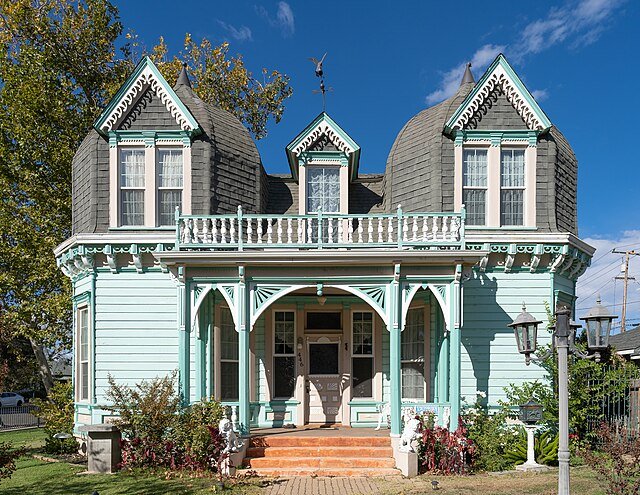
Walking through an older neighborhood can feel like a gallery tour of the late 19th century, and the Victorian home stands out as the undisputed focal point of these streets.
These structures are defined by an unapologetic commitment to ornament, verticality, and craftsmanship. While modern design leans toward minimalism, the quintessential Victorian aesthetic embraces the "more is more" philosophy.
Let's take a look behind the old lath and plaster to see what makes these historic icons stand the test of time.
What Is a Victorian-Style Home?
Victorian-style houses refer to a category of architectural designs that emerged during the reign of Queen Victoria (1837–1901), characterized by narrow footprints, verticality, and elaborate decorative trim.
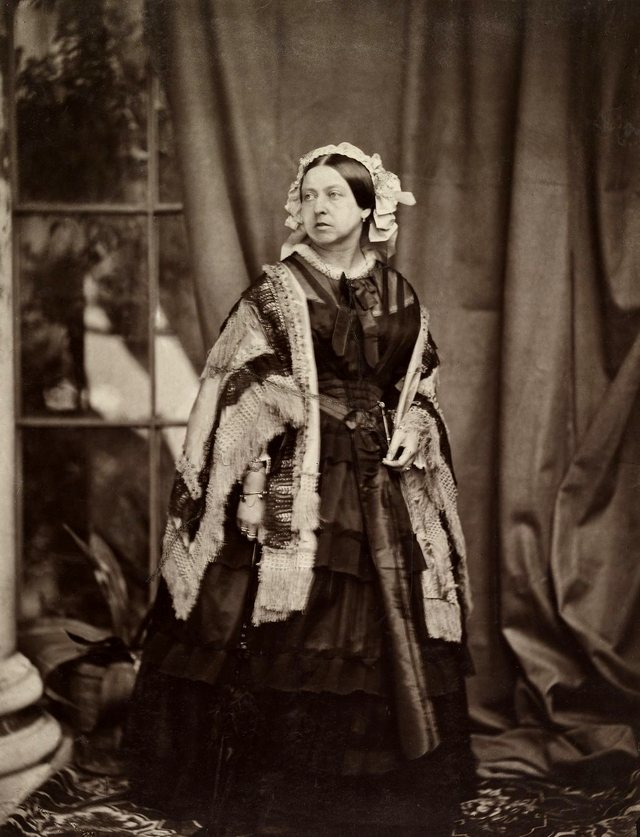
Queen Victoria by JJE Mayall, 1860 / Wikimedia Commons
These residences were a departure from the symmetrical, subdued styles of the previous era. The rise of the Victorian home coincided with the Industrial Revolution, which meant that for the first time, intricate wooden details and mass-produced glass could be shipped across the country via rail.
What does a Victorian home look like, you ask? You can identify one by these six defining characteristics:
1. Focus on verticality and height
Victorian architects wanted to draw the eye upward. These homes usually stand two or three stories tall, featuring steeply pitched rooflines that accentuate their height. Inside, this translates to soaring ceilings that make even narrow rooms feel grand.
2. Elaborate decorative trim and gingerbread details
The term gingerbread describes the lacelike wood trim found along eaves, porches, and windows. These ornaments demonstrated the homeowner's access to modern manufacturing. You will often see:
Scrolled brackets supporting the roof
Intricate spindles on porch railings
Decorative bargeboards (also known as vergeboards) along the gable ends
3. Asymmetrical shapes and complex rooflines
Unlike the boxy, symmetrical Colonial homes that preceded them, Victorian house plans are intentionally irregular. One side of the house might feature a massive bay window while the other side boasts a wraparound porch or a protruding wing.
The rooflines are equally chaotic, involving a mix of gables, hips, and sometimes even flat sections, all intersecting at different angles to create a unique silhouette for every property.
4. Large wrap-around porches
The porch served as the social hub of the Victorian era. These are rarely small entryways; instead, they often stretch across the front and around the side of the house. They feature heavy ornamentation and served as a transitional space between the private interior and the public street.
In many restorations, these porches are the first thing a passerby notices, acting as a grand frame for the rest of the architecture.
5. Textured wall surfaces
Victorian architecture emphasized visual complexity rather than flat, uniform walls. Designers used a mix of materials, textures, and patterns to create depth and interest across the facade. Common techniques included:
Scalloped shingles: Decorative wood shingles shaped into patterns such as fish scales, often used in gables or accent areas.
Patterned masonry: Decorative brickwork, sometimes using contrasting colors and horizontal bands (belt courses) to articulate different levels of the building.
Cladding variation: Combining horizontal clapboard with vertical board-and-batten or decorative shingles to create contrasting textures across different sections of the facade.
6. Towers, turrets, and bay windows
A signature mark of the high Victorian style is the inclusion of a tower or turret, usually located at a corner of the house. These were inspired by medieval castles, giving the home a romantic, fortified look.
Bay windows serve a dual purpose: they add to the irregular exterior shape and create sun nooks inside. They flooded the parlors with natural light during an era before electricity was widespread.
When Were Victorian Homes Built?
Victorian house styles were built primarily between 1837 and 1901, though the style's influence extended into the early 1910s in various regions. This era was far from a monolith; it was a sixty-year progression of shifting tastes, technological leaps, and cultural influences.
As building techniques evolved from hand-hewn timber to balloon framing, the homes became more daring and complex.
The Gothic Revival influence (1840s–1880s)
Early Victorian architecture looked back to the Middle Ages for inspiration. Gothic Revival Style homes are easily identified by their pointed arches, similar to those found in old European churches.
These Victorian–style houses feature steep gables and decorative wooden trim that hang from the roofline. In rural areas, this style morphed into "Carpenter Gothic," where local builders used newly invented scroll saws to create elaborate designs in wood rather than stone.
Italianate homes and the rise of the bracketed cornice
By the mid-1800s, the trend shifted toward the look of Italian villas. These homes moved away from the sharp points of the Gothic era in favor of flat or low-pitched roofs and rectangular shapes. The defining feature here is the bracket or the decorative wooden supports tucked under the wide eaves of the roof.
The Second Empire and the iconic Mansard roof
Heavily influenced by the architecture in Paris during the reign of Napoleon III, the Second Empire style brought a sense of formal elegance to the Victorian neighborhood. The dead giveaway for this style is the Mansard roof, which is a four-sided gambrel-style hip roof characterized by two slopes on each of its sides.
Queen Anne: The pinnacle of Victorian ornamentation
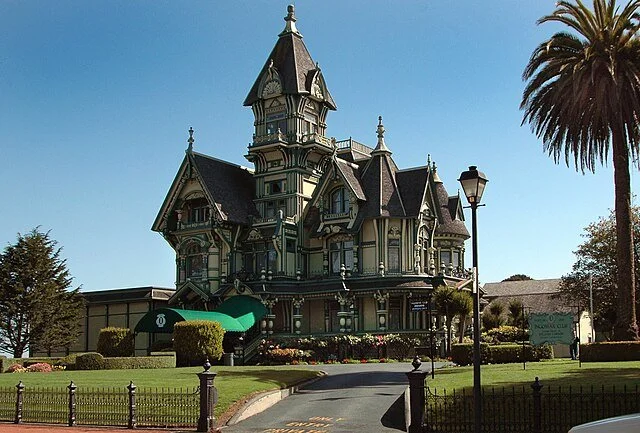
When most people think of a "haunted house" or a "painted lady," they are thinking of a Queen Anne style. Emerging in the 1880s, it represents the most decorative and "messy" (in the best way) version of Victorian life. These homes are a riot of textures, including:
Gabled roofs with high peaks
Round or square towers
Wrap-around porches with turned spindles
Stained glass windows in the entryways
Differing shingle patterns on every story
Stick and Eastlake movements
The Stick style was a transitional phase that emphasized the skeleton of the house. Builders applied decorative wooden slats—"sticks"—over the exterior walls to mimic the internal structural frame. It feels more angular and woody than the Queen Anne.
This often overlapped with Eastlake movement details, named after Charles Eastlake. He preferred furniture and architectural accents that were chiseled and robust, featuring knobby turnings and geometric perforations in lieu of the delicate, flowing curves of earlier decades.
The transition to Folk Victorian for the middle class
Not everyone could afford a custom-designed mansion with a five-story turret. Folk Victorian was the ‘everyman’ version of the trend. These were essentially simple, square farmhouses or cottages that had ‘Victorian kits’ applied to them.
A homeowner might buy a basic house and then order mass-produced brackets and spindles from a catalog to dress up the porch and gables.
This brought the high-fashion look of the era to the working class and is why you still see these dressed-up cottages in many historic small towns today.
Where to Find Victorian Homes?
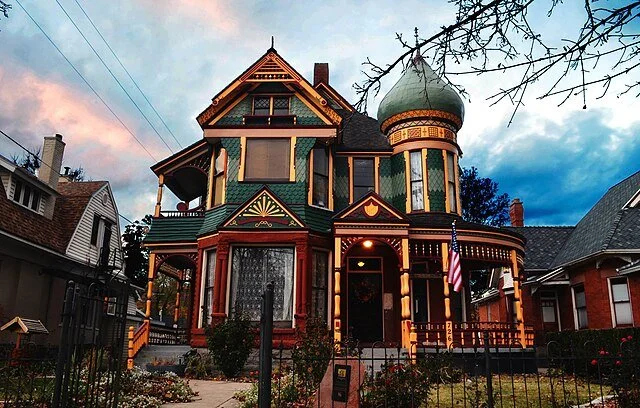
While scattered throughout the United Kingdom and former British colonies, the highest concentrations of well-preserved Victorian-era houses are found in historic American boomtowns and established coastal cities.
These architectural relics remain most prevalent in areas that experienced significant economic growth during the late 19th century.
Today, these enclaves serve as protected historic districts that offer a glimpse into the craftsmanship of a bygone era.
Portland, Oregon: A Pacific Northwest treasure trove
Portland, OR, where Revive Works Remodeling is based, is home to some of the most stunning Victorian residential architecture on the West Coast.
Because the city expanded rapidly during the late 1800s, neighborhoods like Northwest 23rd (Nob Hill), Ladd’s Addition, and the historic pockets of Southeast Portland are dense with high-style Queen Annes and Italianates. These homes are prized for their old-growth timber frames and unique PNW flair.
ALSO READ: Craftsman Homes in Portland: Guide to the Rose City’s Favorite Architecture
San Francisco’s Painted Ladies and beyond
San Francisco is perhaps the most famous hub for this style, particularly the Painted Ladies at Alamo Square. The city’s steep hills provide a dramatic backdrop for the verticality of Victorian home design.
Most of these are Row House Victorians, which are narrower than their suburban counterparts but make up for it with incredibly dense facade ornamentation. The city’s strict preservation laws ensure that these colorful rows remain a primary tourist attraction and a testament to 19th-century urban planning.
The historic districts of Cape May, New Jersey
Cape May is a unique case because it is essentially a time capsule. After a devastating fire in 1878, the entire town was rebuilt almost simultaneously, resulting in the largest collection of late 19th-century framed Victorian buildings in the United States.
New Orleans and the Garden District
In the South, Victorian architectural style took on a different life to accommodate the humid climate. The Garden District of New Orleans features towering Victorian mansions with filigree ironwork instead of just wooden gingerbread. These homes include:
Ceiling-to-floor windows to encourage cross-ventilation
Double-tiered galleries (stacked porches)
High raised foundations to protect against flooding
The Old West Victorian pockets of Colorado
Silver and gold mining booms in places like Georgetown, Silverton, and Leadville led to an explosion of Victorian construction in the heart of the Rocky Mountains. These are often Folk Victorians or Miner’s Cottages that feature surprisingly ornate detail given their rugged locations.
The contrast of a delicate, pastel-colored Queen Anne Victorian against a backdrop of jagged, snow-capped peaks is one of the most striking architectural sights in the American West.
Boston and the New England suburbs
Boston and its surrounding areas, like Newton and Dorchester, boast a massive inventory of Stick Style and Shingle Style Victorians. These homes tend to feel a bit more somber and sturdy than the bright Painted Ladies of the West.
They often use dark-stained wood shingles and heavy stone foundations, which reflect the more conservative, established wealth of New England's merchant class during the Industrial Revolution.
Portland Victorian Home Renovation: Between History and Modern Living


Renovating Portland Victorian homes is a specialized craft that requires balancing the preservation of 19th-century artistry with the structural demands of the 21st century. Because the Pacific Northwest environment is notoriously damp, these historic homes face unique challenges that a standard modern house simply does not.
Addressing the challenges of Oregon’s climate
The constant moisture of the PNW is the primary enemy of a historic exterior. Victorian-era homes feature thousands of linear feet of decorative trim and complex joints where water can easily hide.
Modernizing the back-of-house layout
Victorian-style home floor plans were originally designed with a strict separation between public parlors and private service areas. In a modern Portland home, this usually leads to a kitchen that feels like a dark, isolated closet.
The kitchen and bath transition
Kitchens and bathrooms are where the Victorian era and the modern era clash most visibly. The goal of a project is to install high-end, functional appliances that don't look like they landed from a spaceship.
Structural seismic retrofitting
In Portland, a critical part of a Victorian renovation is the stuff you can't see. Most homes built before 1901 are not bolted to their foundations. During a comprehensive remodel, we prioritize seismic retrofitting, essentially strapping the house to the earth.
This ensures that the beautiful turrets and high gables we’ve worked so hard to restore remain standing through any future tectonic shifts.
Balancing historical integrity with energy efficiency
You don't have to choose between a drafty authentic house and a cozy modern one. We utilize specialized insulation techniques that prevent moisture buildup (a common mistake in amateur renovations).
Revive Your Victorian Legacy Today.
Victorian-age homes remain the gold standard for architectural character. While their complex rooflines and intricate gingerbread trim require a higher level of maintenance than a modern drywall box, the payoff is a home with a soul and a story.
For those lucky enough to own one of these historic gems in the Pacific Northwest, the challenge lies in the revival. Updating the electrical, plumbing, and layout to meet the demands of modern life (without stripping away the 19th-century magic), takes a specialized skill set. Revive Works Remodeling is dedicated to this exact balance.
Focusing on thoughtful restoration and functional remodeling, we help Portland homeowners ensure their historic properties remain vibrant and sturdy for the next hundred years. Need consultation on your historic home improvement project? Reach out to us.