
How Much Does a Bathroom Remodel Cost in Portland, OR?
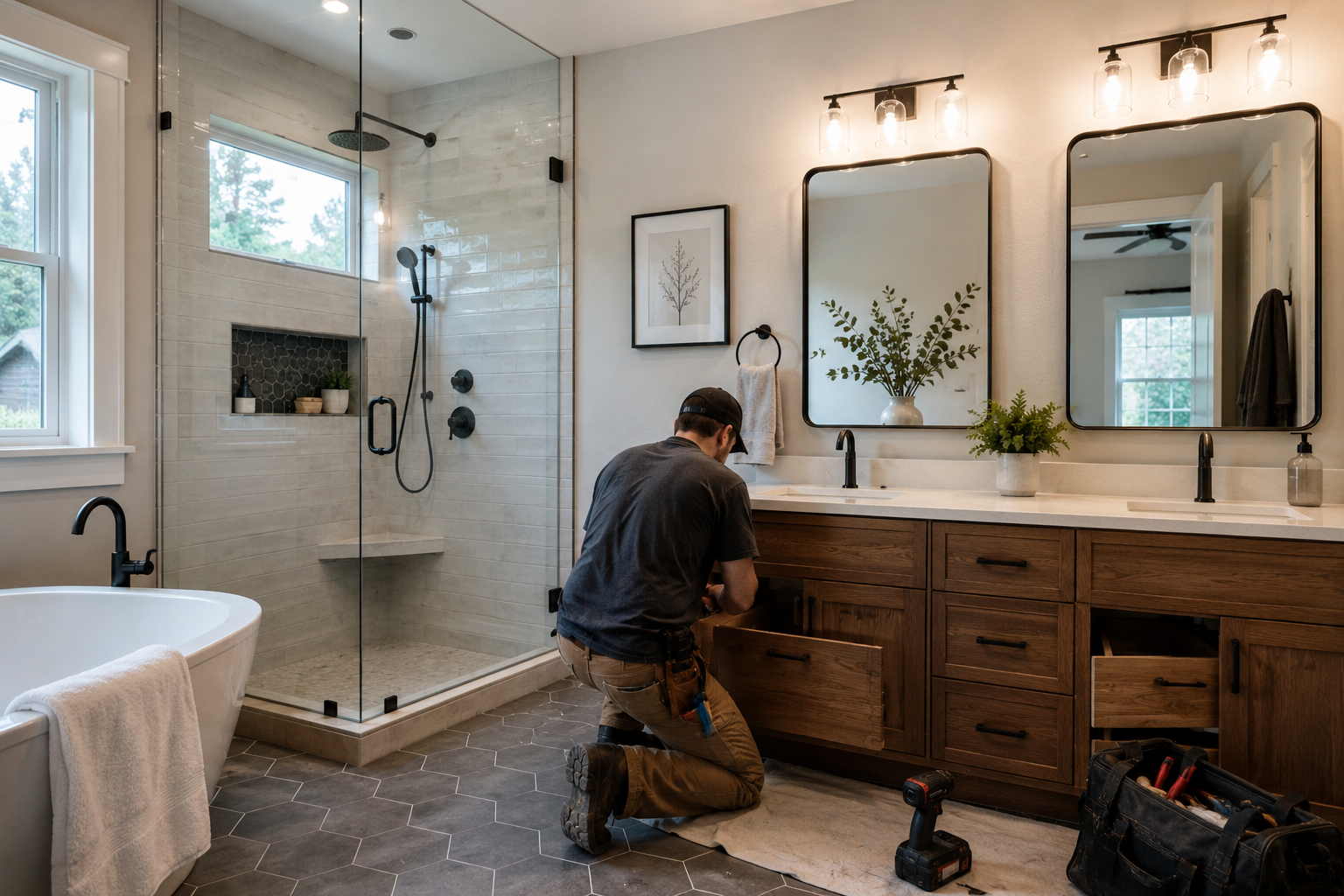
Bathroom remodeling prices can be frustrating to research because the numbers online often describe completely different projects. Replacing a vanity, fixtures, and flooring is one level of work. Gutting the room, rebuilding the shower, moving plumbing, and installing custom finishes is another.
Bathroom size certainly affects the budget, but it seldom tells the whole story. The scope of construction, existing conditions, plumbing changes, tile work, and material selections have a much greater influence on the final price.
Here is what Portland homeowners can realistically expect at different remodeling levels and what tends to move those costs up (or down).
Bathroom Remodel Cost in Portland, OR: What Should You Expect to Pay?
A professionally completed bathroom remodel in Portland, OR, can cost roughly $15,000 to $25,000 for a limited update and $50,000 to $90,000 or more for extensive custom work. A substantial mid-range bathroom remodel will fall somewhere around $25,000 to $50,000.
These ranges are useful for early planning. That said, what you can accomplish within each range depends heavily on how much of the existing bathroom stays in place and how far the project goes beyond replacing finishes.
Cosmetic or limited bathroom update: roughly $15,000-$25,000
At this level, the existing bathroom layout generally stays intact. The toilet, vanity, shower, and tub remain in their current locations, allowing more of the budget to go toward replacing worn or outdated finishes.
A project might include a new vanity and countertop, updated plumbing fixtures, lighting, a mirror, paint, flooring, or limited tile work. Straightforward fixture replacements can also fit within this scope when the underlying plumbing and surrounding materials are in good condition.
Mid-range bathroom remodel: roughly $25,000-$50,000
A mid-range remodel replaces most of the major components in the room. You may update the vanity, countertop, flooring, toilet, lighting, ventilation, plumbing fixtures, and shower or tub area as part of one coordinated project.
This range also provides room for better tile, improved waterproofing, a glass shower enclosure, and more customized finish selections. Modest changes to the layout may be possible, although relocating several plumbing fixtures can push the project toward the higher end.
For many homeowners, this is the range where the bathroom begins to feel fully remodeled rather than selectively updated.
High-end or custom bathroom renovation: roughly $50,000-$90,000+
Custom bathroom remodeling can reach $50,000 to $90,000 or more when the project involves substantial layout changes, premium materials, or construction that extends beyond the existing bathroom configuration.
A larger primary bathroom might include a custom tiled shower, curbless entry, freestanding tub, custom cabinetry, heated flooring, extensive tilework, premium plumbing fixtures, a frameless glass enclosure, etc. Moving plumbing or modifying walls adds another layer of construction.
Projects involving structural changes, extensive repairs, or particularly high-end finishes can exceed $90,000.
What about a small bathroom?
A smaller bathroom remodel generally requires fewer square feet of flooring, tile, and paint, but that does not mean the overall project will be inexpensive.
Bathrooms concentrate a lot of specialized work into a small footprint. A 40-square-foot bathroom may still need demolition, plumbing, electrical work, waterproofing, ventilation, tile installation, cabinetry, fixtures, and finish carpentry.
Many of those costs do not shrink proportionally with the room. A plumber still needs to install the toilet and shower valve. The electrician still needs to complete the required work. A tiled shower still needs to be waterproofed correctly. This is why price per square foot can sometimes be higher in a small bathroom than in a larger remodeling project.
ALSO READ: Whole Home Remodel Cost: Factors, Budgeting Tips, & More
What Affects the Cost of a Bathroom Remodel in Portland?
Two bathrooms with nearly identical dimensions can end up with very different budgets. Keeping the existing layout and replacing finishes is fundamentally different from relocating fixtures, rebuilding walls, or repairing problems discovered during demolition.
The following decisions and existing conditions usually have the greatest effect on Portland bathroom remodel cost.
Keeping or changing the existing layout
Keeping the toilet, shower, tub, and vanity in their existing locations can simplify a remodel considerably. Existing water supply and drain locations can continue serving the new fixtures. It reduces the amount of work inside the walls and floor.
Moving fixtures may require rerouting water lines and drains, opening additional walls or flooring, modifying electrical work, and rebuilding the affected surfaces afterward. Moving a toilet or shower is therefore a very different cost decision from replacing one in the same location.
Shower and tile design
The shower can become one of the largest individual investments in a bath remodel, particularly when it is built from scratch, and size is only part of the equation.
Waterproofing, tile material, tile dimensions, installation pattern, niches, benches, curbs, drains, and glass all affect the work involved. Large-format tile can reduce the number of grout joints but requires a suitably flat substrate and careful installation. Meanwhile, intricate patterns and small-format tile may require considerably more labor.
A curbless shower can add another layer of planning because the floor assembly and drainage need to accommodate a continuous transition into the shower.
Plumbing fixtures and bathroom finishes
Fixture prices span an enormous range. A straightforward faucet, shower system, toilet, and vanity can keep selections relatively controlled, while designer plumbing fixtures and custom cabinetry can add thousands of dollars without changing the size of the room.
The same applies to countertops, lighting, mirrors, hardware, tile, and shower glass. You do not need to choose the least expensive option across the board, but deciding where premium materials matter most can keep the overall budget focused.
Existing conditions behind the walls and floor
Demolition sometimes reveals work that could not be fully evaluated while the bathroom was intact. A slow toilet or shower leak may have damaged the subfloor. Moisture can affect framing, and older plumbing or electrical work may need attention once it becomes accessible.
These discoveries are important because the damaged or inadequate material needs to be addressed before new finishes cover the area again. Older Portland homes can also contain previous remodeling work that requires correction before the new bathroom can be built properly.
Accessibility and aging-in-place features
A handicap-accessible bathroom can include a curbless shower, wider doorway, reinforced walls for grab bars, accessible vanity, improved maneuvering space, or fixtures positioned for easier use.
These features do not automatically make a bathroom dramatically more expensive. The cost depends on what has to change to accommodate them. Adding blocking for future grab bars while the walls are already open is relatively straightforward. Widening a doorway or creating a curbless shower may involve framing, floor, plumbing, or waterproofing changes that affect a larger portion of the remodel.
Labor and project complexity
Bathrooms involve several trades working within a relatively small area. Demolition may be followed by carpentry, plumbing, electrical work, tile installation, cabinetry, painting, glass installation, and finish work.
The more custom the project becomes the more coordination it requires. Complex tile layouts, relocated plumbing, structural modifications, and detailed finish work all add labor even when the bathroom itself is not particularly large.
Do You Need Permits for a Bathroom Remodel in Portland?
It depends on the work involved. Simple cosmetic updates may not, while changes to plumbing, electrical systems, ventilation, or structural framing can require one or more permits.
Plumbing permit: Applies when installing or relocating plumbing, including changes to water supply or drain lines.
Electrical permit: May be required when adding or altering wiring, circuits, outlets, switches, or lighting.
Mechanical permit: Comes into play when installing or modifying bathroom ventilation or other mechanical systems.
Building permit: May be required when the remodel involves structural work, such as removing or altering walls or framing.
Permit fees vary according to the work being performed, and building permit fees can also depend on project value. Portland publishes current residential and trade permit fees and offers an online fee estimator for projects with a defined scope.
How to Set a Realistic Bathroom Remodeling Budget
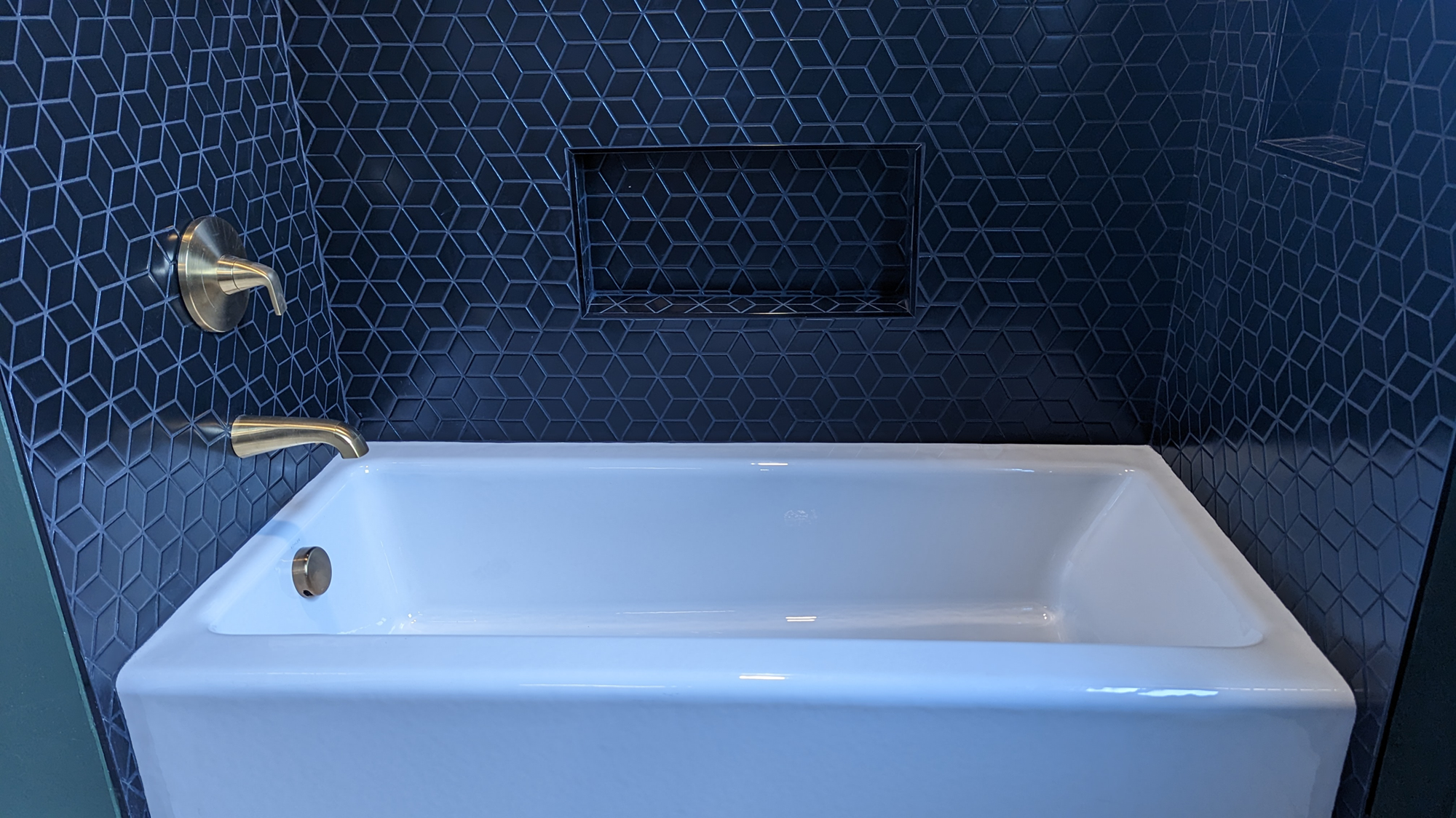
A useful remodeling budget starts with deciding what the bathroom needs before shopping for tile, faucets, or vanities. Those selections are important, but major construction decisions can change the budget much faster.
A few early choices can make the eventual estimate easier to understand.
Define the scope before choosing finishes
Start with the room itself. Decide whether the project involves replacing fixtures in their current locations, rebuilding the shower, changing the layout, repairing damaged materials, improving accessibility, or completely gutting the bathroom.
Once that scope is clear, material selections can be made within a budget that already accounts for the necessary construction. Choosing finishes first can create unrealistic expectations if a large share of the eventual budget needs to go toward work behind the walls.
Separate priorities from upgrades
Decide which features will have the greatest effect on how you use the bathroom and spend accordingly.
Someone who uses the shower every day may prioritize a larger tiled shower and better fixtures while choosing a straightforward vanity. Another homeowner may care more about storage, heated flooring, or custom cabinetry. A budget becomes easier to control when every upgrade does not receive equal priority.
Leave room for conditions discovered during demolition
Some bathroom problems remain hidden until demolition begins. Water damage around a toilet, deteriorated subfloor beneath a shower, aging plumbing, or questionable work from an earlier renovation can change what needs to be repaired.
Leaving some flexibility in the budget helps prevent those discoveries from forcing compromises elsewhere in the project. This is useful when remodeling an older home or a bathroom with a known history of leaks.
Compare contractor estimates by scope
A lower estimate is not necessarily pricing the same project. One contractor may include demolition, debris removal, permits, waterproofing, painting, and a realistic fixture allowance while another leaves several of those items outside the initial number.
Look closely at what each estimate includes. Pay attention to allowances, exclusions, material assumptions, and work that could become a change order later. Comparing the scope behind the number gives you a much better picture of what the remodel will actually cost.
READ NEXT: How to Choose a Portland Remodeling Contractor
Let’s Put a Real Number on Your Bathroom Remodel.
Online price ranges are useful when you are deciding whether a remodel fits your plans. Once you start thinking seriously about the project, though, the number that matters is the one based on your bathroom, your priorities, and the work required to build it properly.
Revive Works Remodeling can evaluate the existing space, talk through the changes you have in mind, and help you understand what that scope realistically requires.
Contact our team to schedule a bathroom remodeling consultation and get a clearer picture of what it’ll take to bring your plans to life.